Herringbone backsplashes, large-format shower walls, mosaic floors, and fireplace surrounds — laid out before the first tile is buttered so the cuts land where nobody looks.
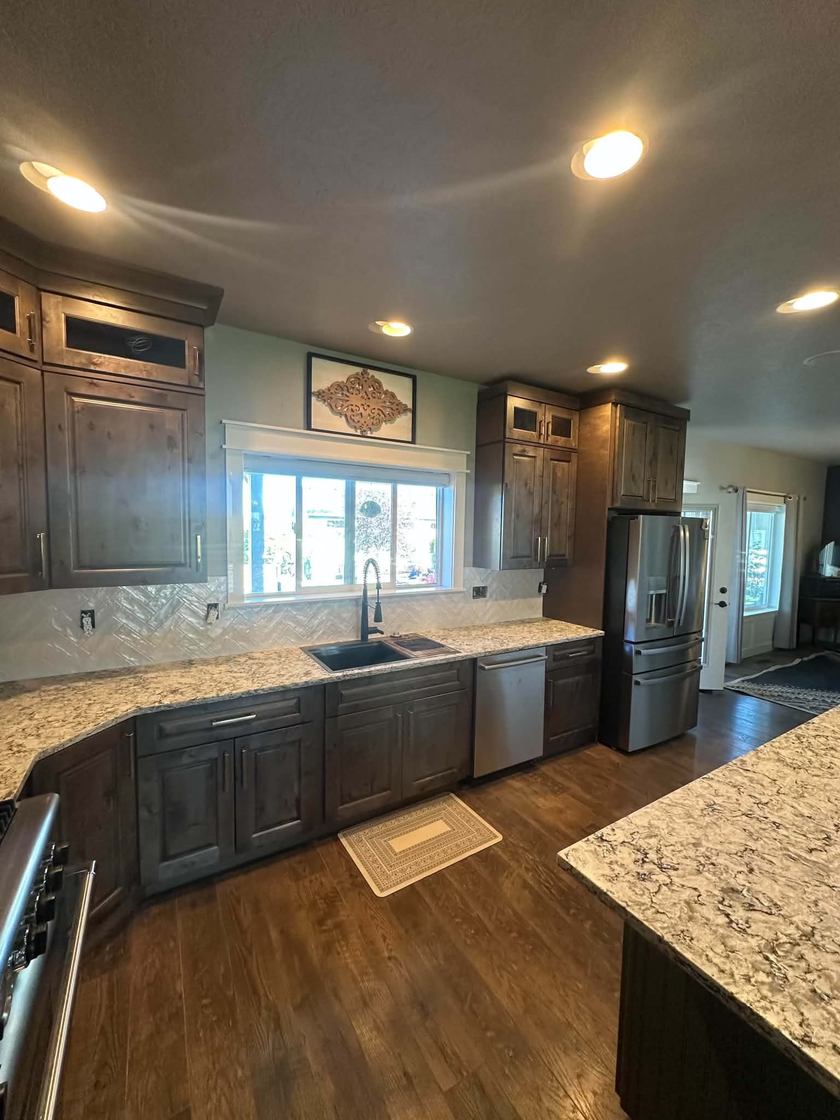
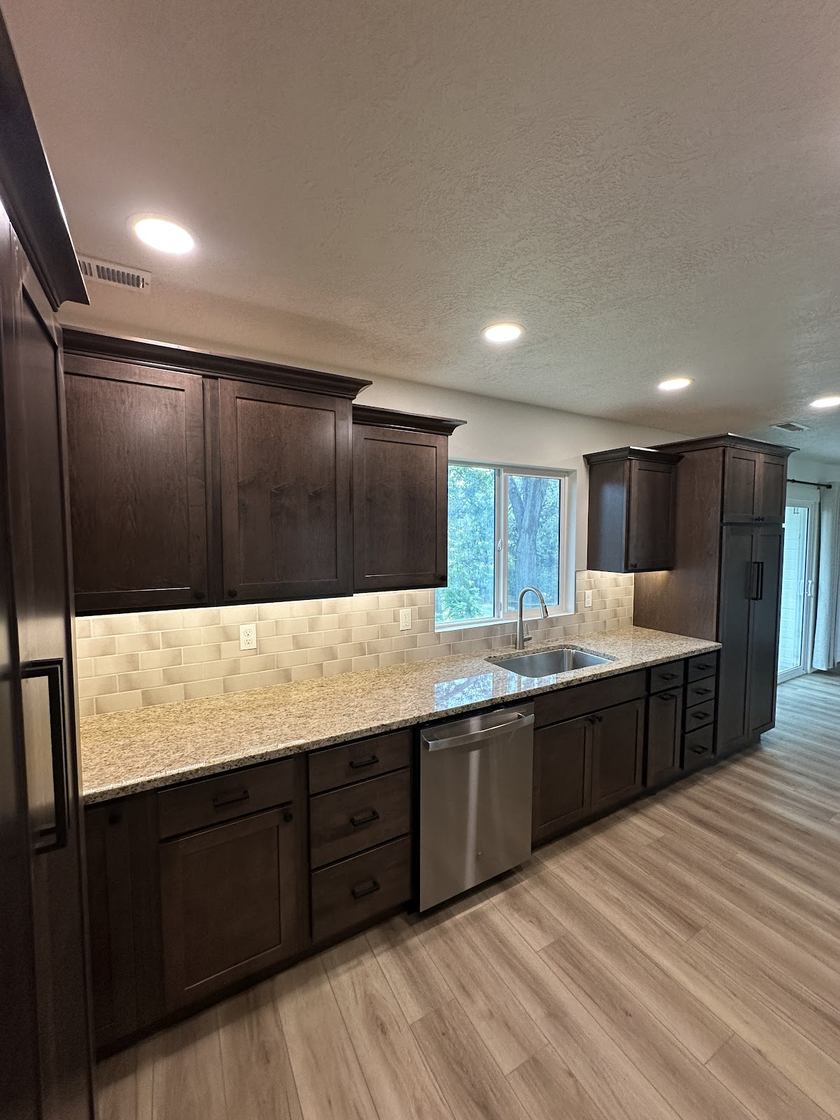 Kitchen remodel · granite + tile backsplash
No line-item surprises halfway through. Here's the scope we carry on a typical custom tile job across the Treasure Valley.
Subway, herringbone, picket, and slab backsplashes centered on the range or the window — whichever the eye actually goes to first.
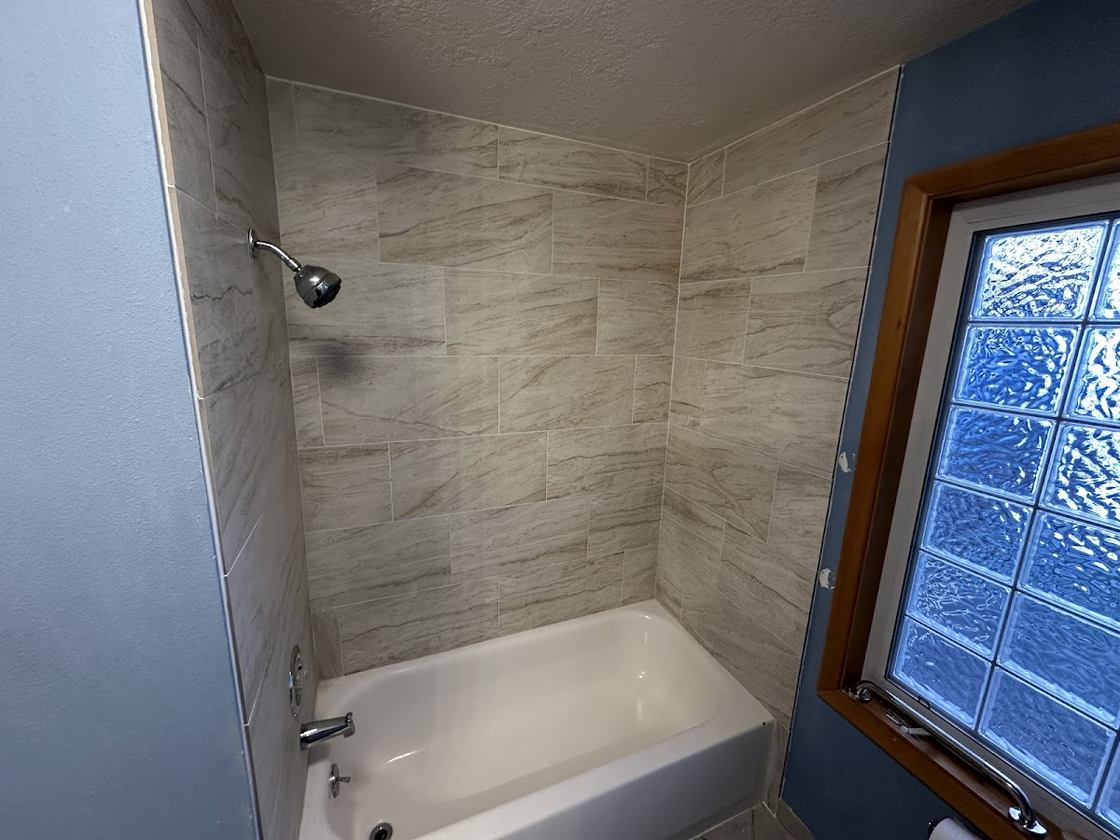
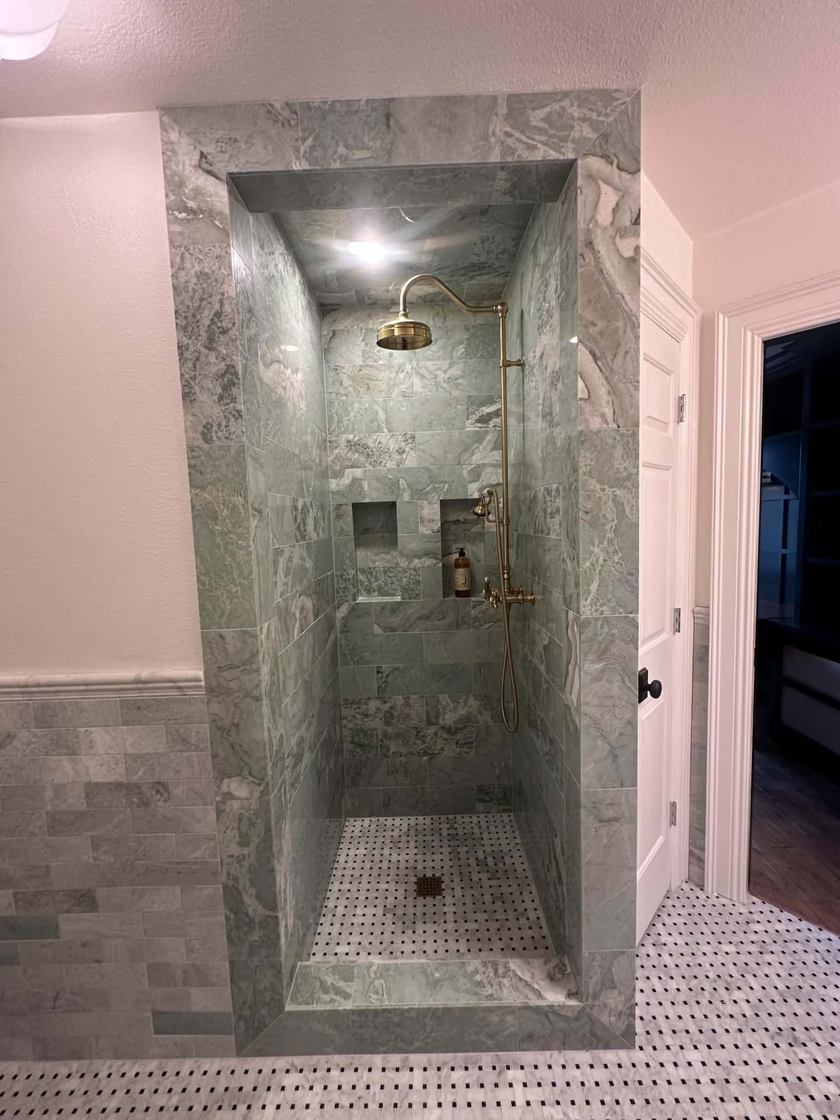
Large-format and mosaic over a properly waterproofed substrate, with niches and benches framed in rather than bolted on.
Bathrooms, entries, mudrooms, and laundry rooms, including heated-floor systems set in the mortar bed.
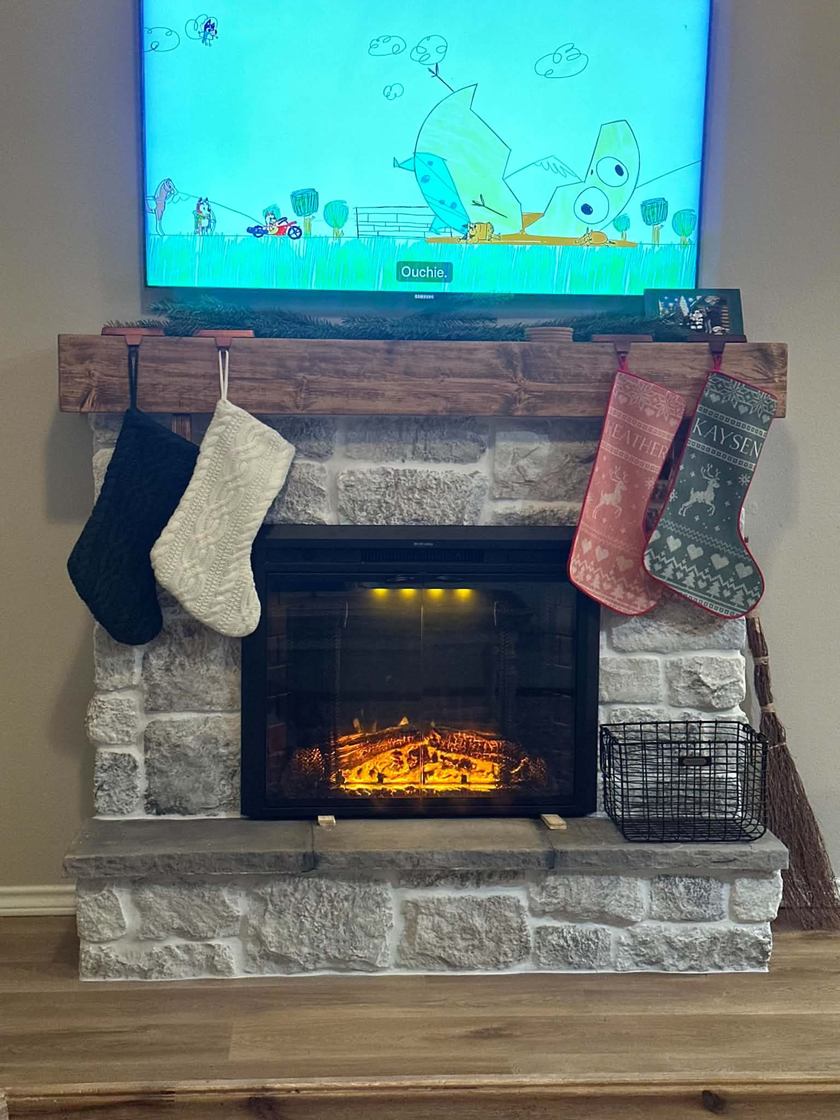
Floor-to-ceiling stone and tile surrounds with a mantel detail that ties into the room's trim.
Backer board, membrane, banded corners, and flatness checks — the work that decides how long the tile lasts.
Grout color chosen against a sample board, joints sized to the tile, and sealing where the material calls for it.
A tile install is decided before any tile goes on the wall. Where the first full tile lands determines whether you end up with a sliver cut at the most visible corner or a balanced course on both ends. Whether the backsplash centers on the range or on the window changes how the whole kitchen reads. Whether the shower's horizontal grout lines carry through the niche is the difference between custom work and a tile job.
We dry-lay and snap lines first, every time. It costs an hour and it's the hour that shows. Large-format tile adds another requirement: the substrate has to be genuinely flat, because a wall that's out by an eighth of an inch will lippage a 24-inch tile badly enough to catch a bare foot.
Grout color changes a tile job more than most people expect — a matched grout makes a wall read as one surface, a contrasting grout makes the pattern the point. We put samples on the actual wall in the actual light before committing. Where the material needs sealing, we seal it, and we tell you plainly what upkeep the floor or shower you chose will ask of you rather than finding out about it later.
A few custom tile projects from around the valley. See the full gallery →
On some floors, yes, if it's sound, flat, and the added height doesn't break the door swings or the transitions. On shower walls, no — we take it back to studs and rebuild the waterproofing, because that's the layer that failed or is about to.
The tile decides. Rectified large-format tile can run tight joints; handmade and pressed tile has size variation that needs a wider joint to absorb it. Forcing a 1/16-inch joint on tile that isn't milled for it produces a wall of crooked lines.
Yes — both mat and cable systems, set in the mortar bed with the thermostat sensor placed where it can be replaced without demolishing the floor. It's the single upgrade bathroom clients tell us they're happiest about, and it's cheap to add while the floor is already open.
Close, not identical. Tile is fired in batches and dye lots shift, which is why we order all of a job's material at once from one lot with attic stock left over. We'll open boxes and blend from several before setting, so any variation is spread across the wall instead of stacked in one corner.
Owner-run out of Boise, Idaho, covering the valley from Star to Caldwell. If you're outside it, call and ask — we'll tell you straight whether the drive makes sense.