Hardwood, engineered, and luxury vinyl plank across whole homes or single rooms — with the subfloor prep and transitions that decide whether a floor still looks right in year five.
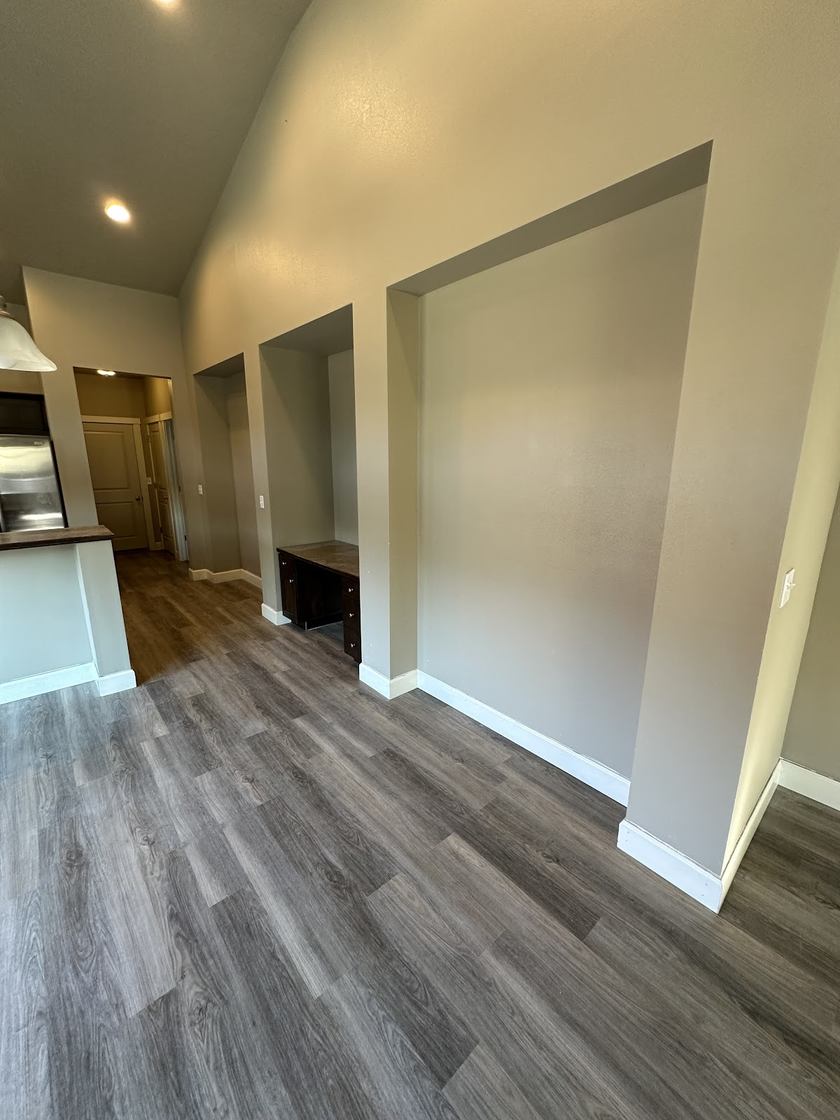
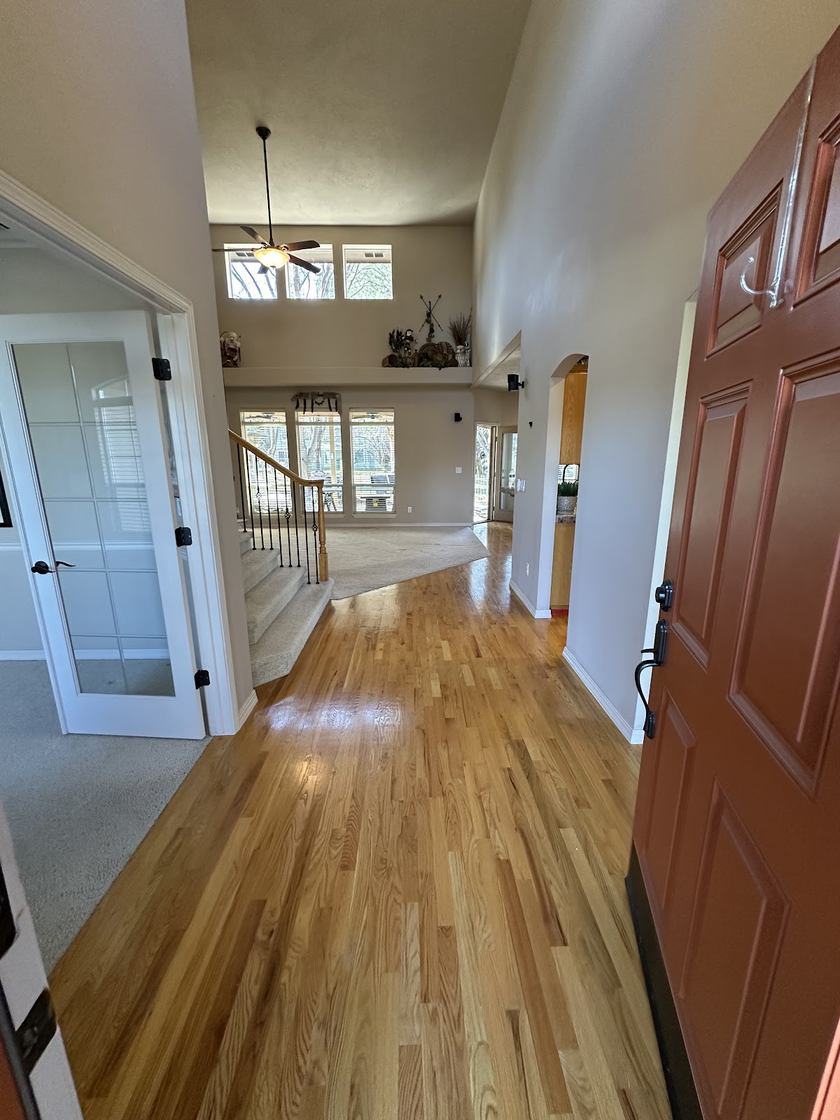 Hardwood entryway · vaulted ceiling
No line-item surprises halfway through. Here's the scope we carry on a typical flooring job across the Treasure Valley.
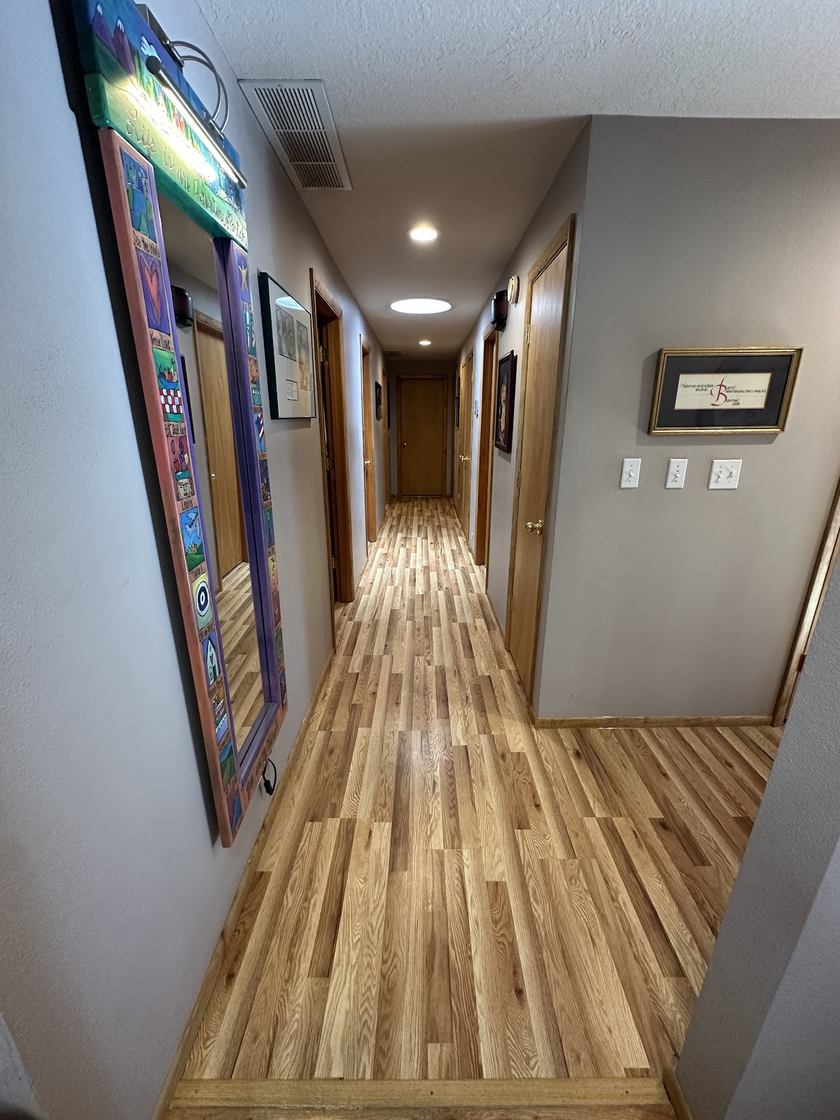
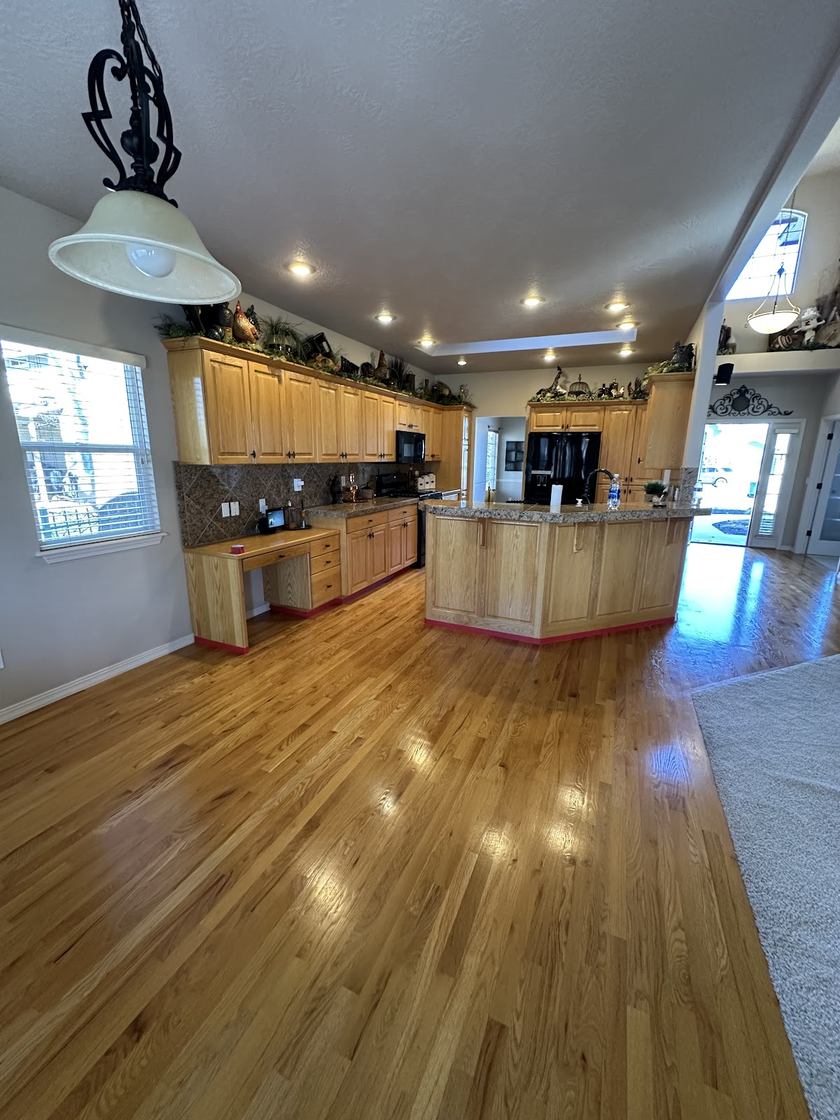
Solid nail-down in oak, hickory, maple, and walnut — racked for color and grain instead of pulled straight off the stack.
Real wood wear layer over a stable core, glued or floated where solid wood would move too much.
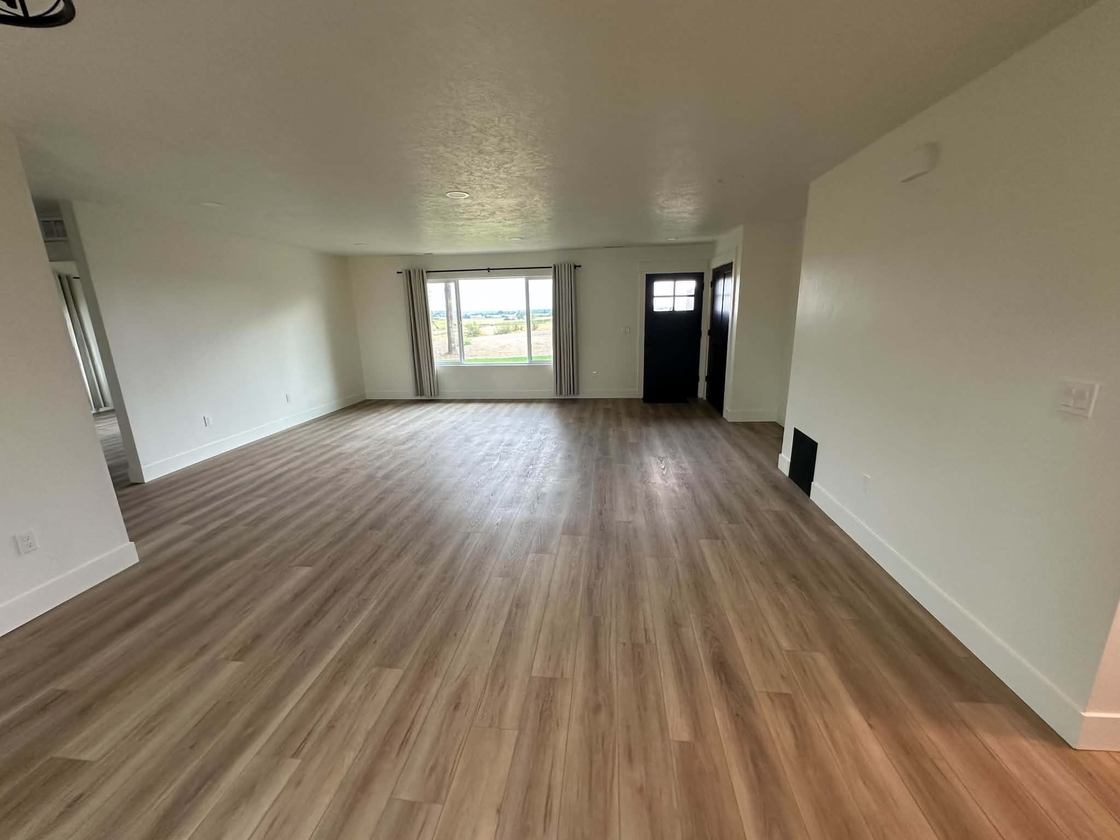
Waterproof LVP for kitchens, baths, basements, and houses with dogs and kids — installed over a subfloor that's actually been flattened.
Self-leveler, sanding, screwing down squeaks, and moisture testing before anything gets laid on top of it.
Thresholds, stair nosing, reducers, and base or shoe that finishes the edge without a gap you can see from standing height.
Old carpet, tile, and glued-down vinyl removed and hauled, including the tack strip and staples everyone else leaves behind.
Most flooring complaints — hollow spots, clicking, gaps opening at the seams, planks that separate over a winter — trace back to two things: a subfloor that wasn't flat, or material that wasn't allowed to acclimate. Neither is visible once the floor is down, and both are why two installs of the identical product can look completely different after a year.
So we spend the time up front. Subfloors get checked with a straightedge and leveled where they're out, squeaks get screwed down while the deck is exposed, and material sits in the house long enough to come to terms with it. Southwest Idaho runs dry, and wood that came off a humid truck will move once it settles into a Treasure Valley winter.
Running one continuous floor through the main level removes transitions, makes the house feel larger, and is almost always cheaper per square foot than doing it in three phases. If the budget only reaches part of the house right now, we'll plan the break at a doorway or a natural line so the next phase ties in cleanly instead of stopping mid-hallway.
A few flooring projects from around the valley. See the full gallery →
Not usually, but you'll want to plan around it. We work room by room where we can, and furniture gets moved as we go. On a whole-home hardwood install with sanding and finishing, the fumes and the cure time make a couple of nights elsewhere worth considering.
Sometimes. LVP and engineered can often float over sound, flat vinyl or tile. Carpet always comes out. Anything soft, cupped, or with a moisture problem underneath comes out too — covering it just buys a year before the same problem shows through the new floor.
Depends on the product and where it's been. Solid hardwood typically needs several days in the actual room it's going into, not stacked in the garage. Most LVP needs far less. We'll tell you the manufacturer's requirement and follow it, because ignoring it is how a warranty claim gets denied.
Yes — treads, risers, nosing, and skirt board. Stairs are the most technical part of a wood floor job and the place a rushed install shows first, so they're priced as their own line rather than buried in the square footage.
Owner-run out of Boise, Idaho, covering the valley from Star to Caldwell. If you're outside it, call and ask — we'll tell you straight whether the drive makes sense.